
What Is Digital Marketing? A Complete Guide for Kenyan Businesses (2026)
Digital marketing is promoting your business through online channels such as search, social media, WhatsApp, email and video. This guide explains the main types, how they work together and how a Kenyan business can start.
Key takeaways
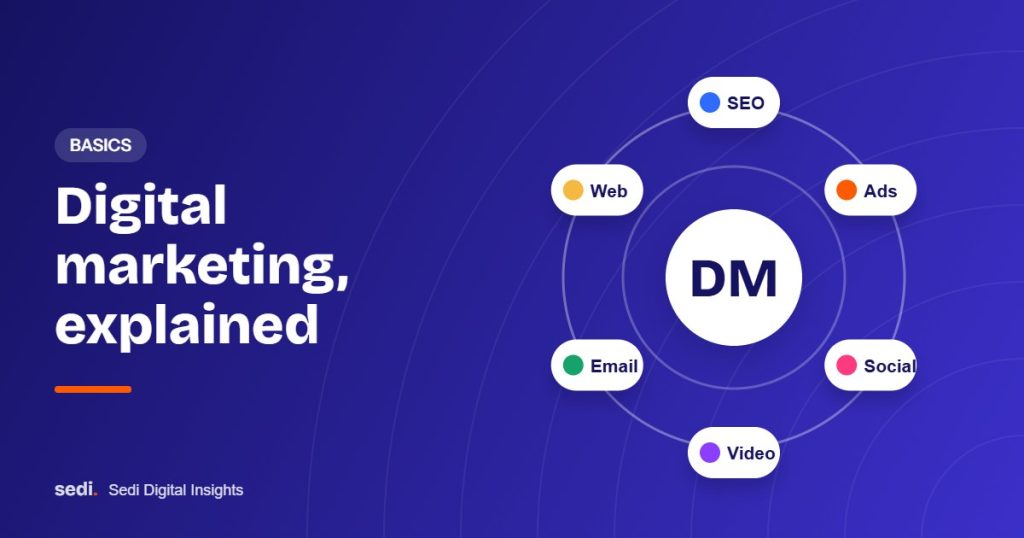
- Digital marketing means reaching and converting customers through online channels: search, social media, ads, content, email, WhatsApp, influencers and video.
- Kenya had about 23.4 million internet users at the end of 2025, roughly 40.5% of the population, and most of them are online through a phone.
- The channels work best together as a funnel: get found, build trust, convert on WhatsApp, your website or M-Pesa, then bring customers back.
- Start small with a clear goal, a mobile-friendly website or landing page, one or two channels and simple tracking of enquiries and sales.
Digital marketing is the promotion of a business, product or service through online channels: search engines, social media, paid ads, websites, email, messaging apps like WhatsApp, influencers and video. Instead of a billboard on Thika Road that everyone drives past, digital marketing lets you reach the specific people most likely to buy, and see exactly what they do next.
In short, digital marketing means getting found online, earning trust and turning attention into enquiries and sales. This guide explains what digital marketing is, the main types, how they fit together and how a Kenyan business can start and measure it without wasting money.
Digital marketing meaning: a simple definition
Traditional marketing pushes one message to a broad audience through radio, TV, print or outdoor. Digital marketing uses the internet to reach people on their phones and computers, often at the exact moment they are looking for something.
Three things make it different:
- Targeting. You can reach people by location, interests, age, behaviour or what they search for, for example “plumber in Kasarani” or “solar installation Nakuru”.
- Two-way conversation. Customers comment, message, review and share. Marketing becomes a conversation, often on WhatsApp.
- Measurement. You can track clicks, calls, messages, form fills and sales, so you know what works and what to stop.
Most businesses still use both. A radio slot or roadside banner can build broad awareness, while digital channels capture the people who then search for you, compare options and ask questions before they buy. The difference is that digital lets you start with a small budget, test quickly and see the return on every shilling.
Why digital marketing matters in Kenya
Kenya is one of the most connected markets in Africa, and the audience is large enough for almost any business to find customers online. Here are the headline figures from the Digital 2026 Kenya data:
| Indicator (late 2025) | Kenya |
|---|---|
| Internet users | 23.4 million (40.5% of the population) |
| Social media user identities | 18.4 million |
| Active cellular mobile connections | 77.5 million |
| Facebook ad reach | 17.0 million |
| YouTube ad reach | 12.1 million |
| LinkedIn members | 6.3 million |
Two realities shape how this works locally. First, Kenya is mobile-first, so your website, ads and content must work well on a phone with patchy data. Second, the journey usually ends in a conversation and a mobile payment: a customer sees your post, taps through to WhatsApp, asks a few questions and pays by M-Pesa. Good digital marketing in Kenya is built around that path.
Types of digital marketing
There is no single “digital marketing”. It is a set of channels, each good at a different job.
1. Search engine optimisation (SEO)
SEO is improving your website and Google Business Profile so you appear when people search for what you sell. It takes months to build but keeps bringing enquiries without paying per click. Read our guide on what SEO is and how it works for the basics.
2. Social media marketing
Posting, engaging and building a community on Facebook, Instagram, TikTok, LinkedIn and X. It builds awareness and trust, and for many Kenyan brands it is the main source of enquiries. Our social media marketing guide for Kenya goes deeper.
3. Paid advertising
Paying platforms like Meta, TikTok, Google and LinkedIn to show your ads to a targeted audience. Ads are the fastest way to get traffic and test offers, but they stop the moment you stop paying.
4. Content marketing
Creating useful articles, guides, videos and graphics that answer customer questions. Good content feeds SEO, gives you something worth posting and helps AI assistants recommend you.
5. Email marketing
Sending newsletters, offers and automated sequences to people who have opted in. Email is underused in Kenya, which makes it a quiet advantage for B2B firms, schools, ecommerce and professional services. Always collect consent in line with the Data Protection Act 2019.
6. WhatsApp marketing
Using WhatsApp Business for catalogues, broadcast lists, status updates, click-to-WhatsApp ads and automated replies. For many Kenyan customers, WhatsApp is where the sale actually happens. See our WhatsApp marketing guide.
7. Influencer marketing
Partnering with creators who already have the attention and trust of your audience. Micro-influencers with engaged local followings often outperform big names on cost per result.
8. Video marketing
Short vertical videos for TikTok, Reels and YouTube Shorts, plus longer explainers, testimonials and product demos. Video is now the default format on most platforms.
| Channel | Main job | Speed of results | Best for |
|---|---|---|---|
| SEO | Get found on Google and AI search | Slow, compounding | Services, ecommerce, B2B |
| Social media | Awareness, trust, community | Medium | Consumer brands, retail, food |
| Paid ads | Targeted reach and leads | Fast | Launches, offers, lead generation |
| Content | Educate and build authority | Slow to medium | Considered purchases |
| Nurture and repeat sales | Medium | B2B, ecommerce, education | |
| Convert and serve | Fast | Almost every Kenyan business | |
| Influencers | Borrowed trust and reach | Fast to medium | Consumer products, apps, events |
| Video | Attention and explanation | Medium | Everyone, especially on TikTok |
How does digital marketing work? The funnel
The channels work best when they are connected. Think of a funnel with four stages:
- Awareness. People discover you through social content, video, influencers or ads.
- Consideration. They check you out: your website, Google reviews, Instagram grid, TikTok comments and articles that answer their questions.
- Conversion. They act: send a WhatsApp message, call, fill a form, book, or pay through M-Pesa or a card checkout.
- Retention and referral. You keep them with follow-ups, email, WhatsApp broadcasts, loyalty offers and great service, and they tell their friends.
A simple example: a Nairobi bakery runs a TikTok video of a cake being decorated (awareness), people search the bakery name and see strong Google reviews (consideration), a click-to-WhatsApp ad lets them order with an M-Pesa Till number (conversion), and a monthly WhatsApp broadcast reminds them about birthday orders (retention).
Your website sits in the middle of all this. It is the one place you fully own, where ads and searches can land and where trust is built. Our guide to building a business website that brings in leads explains what it needs.
How to start digital marketing for your business
- Set one clear goal. For example, 40 qualified WhatsApp enquiries a month, or KES 300,000 in online sales.
- Know your customer. Who are they, where do they spend time online, what do they search and what makes them hesitate?
- Fix your foundations. A fast, mobile-friendly website or landing page, a verified Google Business Profile, a WhatsApp Business account and clear contact details everywhere.
- Pick one or two channels. Do them well before adding more. Most small businesses start with Google Business Profile plus one social platform.
- Plan content. Decide what you will post each week: proof, education, offers and behind the scenes.
- Test a small ad budget. Once your organic content shows what resonates, put money behind it.
- Measure and adjust monthly. Keep what brings enquiries, drop what does not.
For a fuller plan, see our guide on how to get customers online in Kenya and our breakdown of what digital marketing costs in Kenya.
How to measure digital marketing
Likes and followers feel good but do not pay rent. Measure what moves the business:
| Stage | What to track | Tools |
|---|---|---|
| Awareness | Reach, video views, impressions, search visibility | Platform insights, Google Search Console |
| Consideration | Website visits, time on page, profile visits, review count | Google Analytics 4, Google Business Profile |
| Conversion | WhatsApp chats, calls, forms, bookings, sales | GA4 events, call tracking, CRM, M-Pesa statements |
| Return | Cost per lead, cost per sale, repeat purchases | Spreadsheet or CRM |
Practical tips:
- Ask every new customer how they found you, and record it.
- Use UTM tags on links so you can see which post or ad sent traffic.
- Track clicks on WhatsApp and call buttons as conversions in GA4.
- Match M-Pesa payments to enquiries where you can, even in a simple spreadsheet.
- Review results monthly and give channels at least a few months before judging them, especially SEO.
Common digital marketing mistakes in Kenya
- Being everywhere at once. Five half-run accounts are worse than two strong ones.
- Boosting posts without a goal. Use proper campaigns with a clear objective and audience.
- Slow WhatsApp replies. A lead that waits two hours often buys elsewhere.
- Ignoring Google. Many buyers search before they buy, even after seeing you on social media.
- Not tracking. Without measurement you cannot tell spend from investment.
- Copying big brands. Your budget and audience are different; focus on the channels that fit your customers.
Get help with your digital marketing
Digital marketing is not one tactic. It is a connected system that gets you found, earns trust and turns attention into sales. Start with a clear goal and strong foundations, choose the channels your customers actually use and measure what matters.
Sedi Digital is a Nairobi digital marketing agency that plans and runs this system for Kenyan businesses, from SEO and AI search visibility and social media management to paid advertising and websites. If you want a clear plan for your business, plan your project with us and we will recommend where to start.
Frequently asked questions
What is digital marketing in simple words?
Digital marketing is any marketing that happens on the internet or on digital devices. It includes showing up on Google, posting and advertising on social media, sending emails or WhatsApp messages, working with influencers and publishing videos and articles that attract customers.
What are the main types of digital marketing?
The main types are search engine optimisation (SEO), social media marketing, paid advertising, content marketing, email marketing, messaging such as WhatsApp marketing, influencer marketing and video marketing. Most businesses use a mix of three or four, connected to a website or landing page.
How does digital marketing work?
It works by meeting people where they already spend time online, giving them useful reasons to trust you and making it easy to act, for example by tapping a WhatsApp button, calling or paying by M-Pesa. Every step can be tracked, so you can see what brings enquiries and adjust your budget.
Is digital marketing worth it for small businesses in Kenya?
For most businesses, yes, because customers increasingly search, compare and ask questions online before they buy. The key is to start with a clear goal and a budget you can sustain, measure enquiries and sales rather than likes, and improve month by month.
How much does digital marketing cost in Kenya?
It ranges from almost nothing for a business owner doing their own posting and Google Business Profile, to monthly agency retainers plus ad spend for growing brands. Your cost depends on how many channels you use, how competitive your industry is and how much content you need.
Keep reading
Clinic and Hospital Marketing in Kenya (2026): A Compliant, Practical Guide
How clinics, dental practices and hospitals in Kenya can attract patients online through Google Maps, easy WhatsApp booking, responsible health education and ethical reviews, within KMPDC rules and the Data Protection Act.

Solar Company Marketing in Kenya (2026): How to Generate Quality Leads
How solar installers and energy companies in Kenya can generate qualified residential and commercial leads with education-led content, savings tools, proof, smart ads and fast follow-up.

Law Firm Marketing in Kenya (2026): How Advocates Can Attract Clients Within the Rules
How Kenyan advocates and law firms can win clients online with websites, local search, legal guides and LinkedIn, while staying inside the Advocates (Marketing and Advertising) Rules, 2014.